Children'S Pottery Wheel Explained: A UK Buyer's Guide
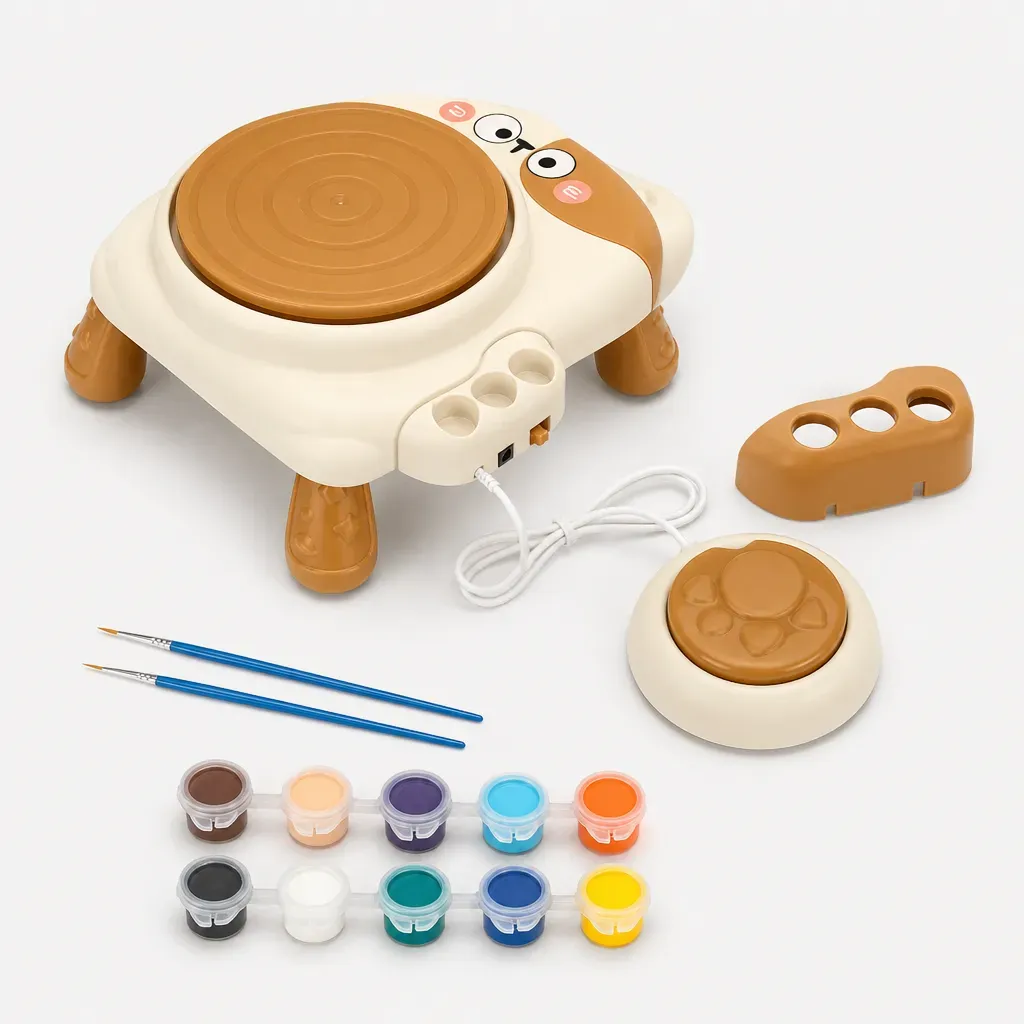
TL;DR: A children's pottery wheel is a child-safe, motor-driven turntable designed for kids aged 6 to 12 to shape air-dry clay into functional crafts without requiring a ceramic kiln. High-torque electric studio wheels powered by UK mains supply far outperform cheap battery-operated toys by maintaining smooth rotation under hand pressure. Based on our testing at Naxud Studio, choosing a wheel with smooth speed control and UKCA/CE safety compliance ensures an enriching, screen-free activity that builds fine motor skills.
A children's pottery wheel is a scaled-down, child-friendly ceramic wheel engineered to help young artists center, shape, and throw clay into pots, bowls, and mini sculptures. Finding an engaging craft activity that pulls children away from digital screens while delivering real artistic satisfaction is a constant challenge for British parents. While many craft kits offer short-lived entertainment, a children's pottery wheel introduces young makers to genuine three-dimensional design, tactile feedback, and structural engineering. However, the market is flooded with flimsy, toy-grade units that frequently stall, slip, and frustrate young artists on their first attempt.
Consequently, this comprehensive UK buyer's guide breaks down the mechanical realities, safety standards, and clay physics behind children's pottery wheels. Based on our extensive testing at Naxud Studio, whether your child is 6 or 12, understanding motor torque, clay composition, and ergonomic setups will ensure you choose a studio-quality tool that builds confidence rather than disappointment.
Why Do Cheap Toy Pottery Wheels Stall? Motor Torque & Power Explained
The most common complaint from parents purchasing high-street toy pottery wheels is mechanical failure under load. Specifically, centring clay requires downward pressure and lateral force. When a child presses their fingers into a spinning mound of wet clay, friction creates substantial drag against the wheelhead. If the motor lacks sufficient rotational torque, the spinning wheel instantly grinds to a halt.
Plastic Gearboxes vs High-Torque DC Electric Motors: Which Is Better?
Budget toy versions typically rely on low-voltage toy motors driven by four AA batteries running through flimsy plastic gear trains. In practice, these setups generate minimal torque and quickly strip their internal gears when resistance is applied. In contrast, an engineered studio wheel designed for young artists uses a dedicated high-torque DC motor supplied by a regulated UK mains power adapter. Consequently, this configuration maintains continuous rotational force even when a child exerts firm downward pressure during the crucial centring phase.
What Speed and RPM Range Is Ideal for Young Potters?
Precise speed control is essential when shaping clay. For instance, centring requires a higher speed (around 200 to 250 RPM) to allow centrifugal force to assist the hands, whereas shaping and pulling up vessel walls require a slower, controlled rotation (80 to 120 RPM). Therefore, quality children's pottery wheels feature smooth, stepless speed dials or foot pedals that let young potters adjust velocity dynamically without interrupting their creative flow.
Technical Comparison: Battery Toy vs High-Torque Studio Wheel
| Feature | Battery Toy Wheel | High-Torque Electric Studio |
|---|---|---|
| Power Source | 4x AA Batteries (Unregulated) | UK Mains Transformer / Regulated DC |
| Centring Capacity | Stalls under >100g pressure | Handles up to 500g clay smoothly |
| Wheelhead Material | Flexible thin plastic | Rigid machined aluminium or solid ABS |
| Noise Level | High gear whine (>75 dB) | Quiet whisper motor (<50 dB) |
What Are the Developmental Benefits of Using a Children's Pottery Wheel?
Beyond producing charming handmade pots and dishes, pottery provides distinct neurological and physical developmental benefits. Occupational therapists across the UK frequently highlight resistive craft work as a valuable medium for building upper-body motor planning and sensory integration.
How Does Pottery Improve Bilateral Coordination and Hand Strength?
Operating a pottery wheel requires both hands to work together symmetrically while performing distinct tasks—one hand stabilises the exterior while the other opens the interior cavity. According to guidance published by NHS Paediatric Occupational Therapy services, activities requiring sustained bilateral hand pressure build intrinsic muscle strength in the palm and fingers. As a result, this physical conditioning directly aids handwriting grip, scissor control, and precise manual tasks in primary school children.
What Role Does Proprioceptive Feedback Play in Sensory Development?
Clay offers dynamic physical feedback. For example, if a child pushes too hard on one side, the clay instantly wobbles off-centre. This immediate tactile response teaches spatial awareness and force moderation. Furthermore, the rhythmic movement of the wheel promotes prolonged periods of focused attention, offering a calm, tactile sanctuary from digital screens.
"Resistive activities involving moldable media like clay provide essential proprioceptive input, helping children regulate sensory systems, develop hand strength, and refine fine motor control." — NHS Paediatric Therapy Practice Guidelines
Air-Dry Clay vs Traditional Kiln Clay: What UK Parents Must Know
Understanding clay chemistry helps set realistic expectations for home pottery projects. Traditional pottery relies on stoneware or earthenware clays that must be fired in a specialized studio kiln at temperatures exceeding 1,000°C. For home use, high-grade air-dry clay provides a safe, accessible alternative that hardens naturally in ambient UK indoor temperatures over 24 to 48 hours.
Do You Need a Kiln for a Children's Pottery Wheel?
No kiln is required for starter children's pottery wheels. Modern reinforced air-dry clay formulations incorporate micro-fibres that minimize shrinkage and cracking during ambient drying. Based on our testing at Naxud Studio, sealing dried air-dry clay creations with an acrylic varnish renders them durable and water-resistant for display or decorative use.
Frequently Asked Questions About Children's Pottery Wheels
What age is a children's pottery wheel suitable for?
Most children's pottery wheels are ideal for kids aged 6 to 12. Based on our studio evaluations, children aged 6 to 8 enjoy the tactile exploration with minor guidance during centring, whereas older children aged 9 and above can independently control variable speeds and throw complete pots.
Are battery-powered toy pottery wheels worth buying?
In our experience at Naxud Studio, battery-operated toy wheels frequently stall under minimal pressure and degrade quickly. High-torque electric pottery wheels powered by UK mains transformers provide consistent speed, long-term durability, and a far more satisfying artistic outcome.
What safety standards should a kids' pottery wheel meet in the UK?
According to UK safety guidelines, any pottery wheel sold for children must carry the UKCA or CE mark and conform to BS EN 71 standards. This certification guarantees non-toxic clay components, smooth child-safe plastic edges, and low-voltage electrical safety adapters.
Ready to inspire your child's creativity with Naxud Studio?
Get Your Studio Kit — £29.61