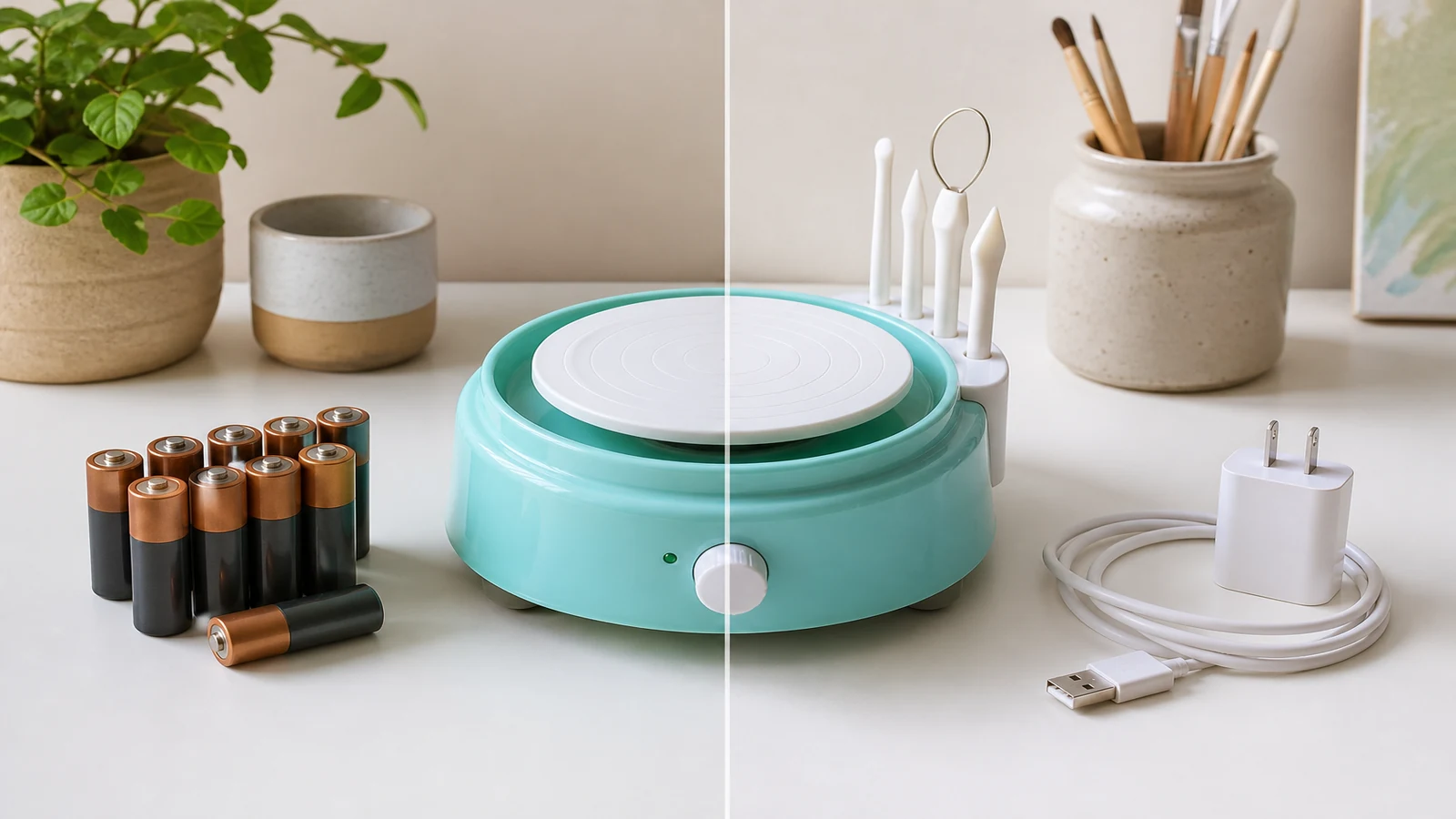
Kids pottery wheel battery vs USB power UK: buyer comparison
Power sounds like a minor spec until party day, when the wheel sits in the middle of the dining table and the nearest socket is behind a sideboard. UK buyers often compare battery and USB models for exactly that reason — freedom of placement versus not hunting for AA cells on a Sunday.
Why power type matters before you buy
A toy-grade wheel needs steady rotation for centreing practice. Weak or fading batteries can make speed drop mid-throw, which feels like failure to a child. USB power from a mains adapter usually delivers consistent spin, but the cable becomes part of your mess-control plan — tape it down or route it away from the clay tray.
Battery-powered wheels: pros and trade-offs
- Pros: Place anywhere; good for garden tables or rooms without spare sockets; no trailing lead near water bowls.
- Cons: Ongoing cell cost; risk of mid-session fade; battery compartment must stay dry when washing nearby trays.
If you choose battery power, keep a fresh set sealed with the gift for rainy-day reliability. Rechargeable AA/AAA can work if the manufacturer allows it — always follow the instruction sheet supplied with the product.
USB-powered wheels: pros and trade-offs
- Pros: Stable speed from a mains USB adapter; no surprise flat batteries during a birthday party.
- Cons: Cable management; child must not pull the wheel while plugged in; socket location dictates table layout.
Many UK families use a phone or tablet charger brick with a standard USB lead. Keep liquids away from the plug end; supervise younger children around cables.
What this site's kit listing states — and what it does not
The live Naxud kids pottery wheel kit page mentions USB in the product copy and describes an electric wheel with two adjustable speeds for ages 6–12 at £29.61. It does not, at the time this article was written, clearly label the unit as battery-only, mains-only or hybrid in a single unambiguous line.
Read the current specification before ordering — do not assume batteries are included or excluded. If the box you receive specifies USB power only, plan a adapter near a safe table. If it expects batteries, stock them before half term.
Choosing for your room layout and holiday use
Carpeted lounge with one distant socket? USB may mean extension leads and extra trip hazards — weigh that against battery freedom. Kitchen table with a spare wall socket? USB often gives smoother sessions.
Whichever power type you use, pair setup advice from how messy a kids pottery wheel gets with a timed plan from rainy-day half-term activities.
Confirm the latest product details on the kids pottery wheel kit page before you buy.
Can I run a USB pottery wheel from a laptop port?
Only if the manufacturer allows it and the port supplies enough stable power. A mains USB adapter is usually safer for motors.
Are rechargeable batteries OK?
Follow the included instructions. Some toy motors specify alkaline only.
Does power type affect how messy the session is?
Indirectly — cable routing and table placement change where splashes land. Mess control is mostly setup, not volts.